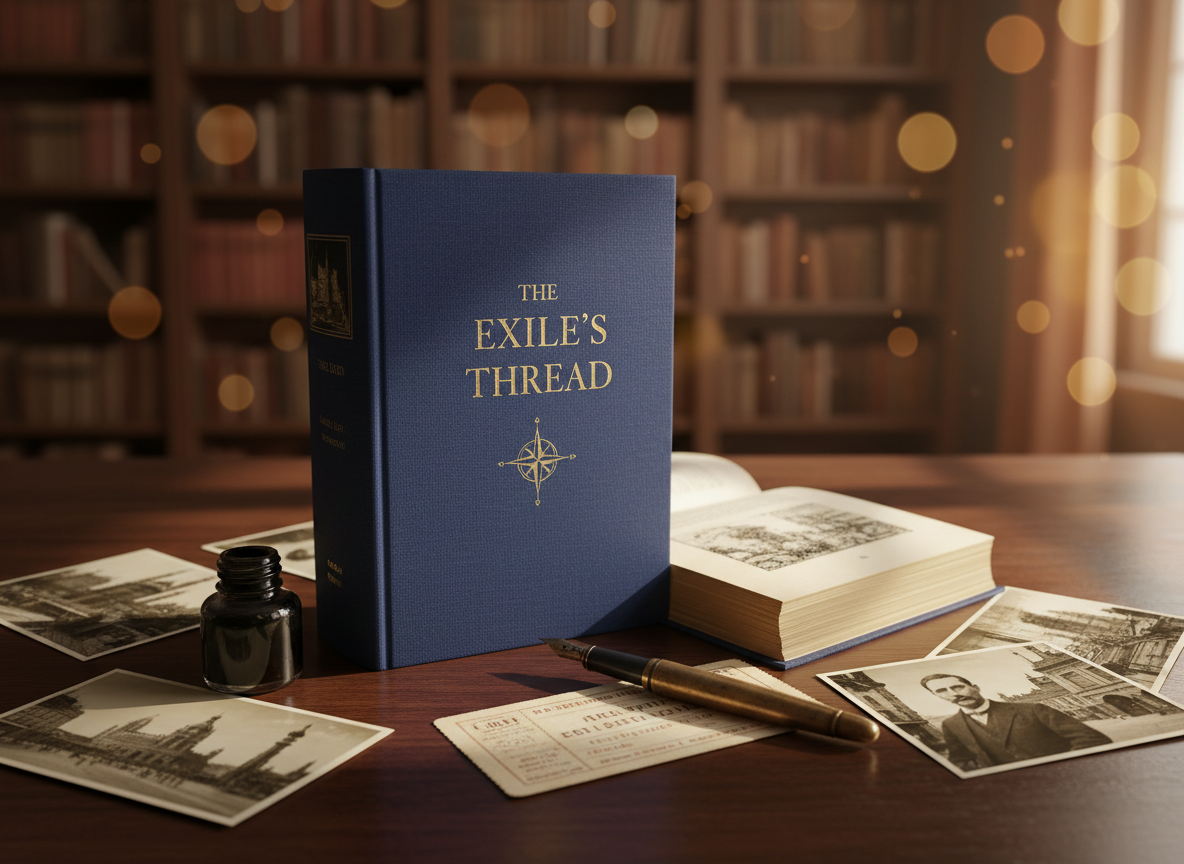
A hardback historical novel with a textured, deep-indigo cloth cover and subtle gold-foil title embossing lies open on a dark wooden table. Around it, a few scattered archival photographs, a worn fountain pen, and a folded train ticket suggest a life interrupted by exile. The setting is a quiet study with tall shelves fading into soft blur. Late-afternoon window light slants across the pages, creating a luminous path of text and gentle shadows. Shot at eye level with a shallow depth of field, the book is in sharp, photographic focus while the background dissolves into warm bokeh, evoking sophistication, memory, and introspective discovery.

Stories where history leaves a scar

Why These Stories Matter

Stories matter because history does not end when the dates are written down, the borders are redrawn, or the official version is printed. History continues inside people — in family silence, inherited fear, old loyalties, exile, shame, courage, and the questions no one wanted to answer.

The stories gathered here are not only about the past. They are about what the past does to a human being. Empires collapse, regimes change, wars begin and end, but the individual person is left to carry the consequences: a lost home, a broken family line, a language half-forgotten, a memory too painful to explain.

That is why fiction, memoir, noir, and hidden history belong together. Archives can tell us what happened. Fiction can ask what it felt like. Memoir can preserve what official history often overlooks. Noir can expose the moral shadows people prefer to hide.

To remember is not only to look backward. It is to understand what still lives within us.

This is the heart of History Beneath the Skin: the belief that the past is never completely gone. It waits beneath the surface, shaping who we are, what we fear, what we love, and what stories we still need to tell.

A small stack of historical fiction and memoir paperbacks, each with muted, atmospheric cover art, rests beside an e-reader on a vintage leather-topped desk. A ceramic mug with faint tea stains, a brass desk lamp, and a closed notebook with a ribbon marker hint at late-night reading sessions. The lamp casts warm, focused light across the covers, while the room beyond falls into velvety darkness, suggesting noir undertones. Captured from a slightly elevated angle in photographic realism, the composition uses rule of thirds to balance print and digital formats, conveying the ease of purchasing both paper and eBooks on the site.

Books

A single open book lies face-up on a linen-draped table near a rain-streaked window, its cream pages filled with dense text and a small map of a forgotten border. Outside, city lights blur into soft bokeh, hinting at war-torn histories and shifting identities beyond the glass. Cool, overcast daylight filters in, creating a subdued, silvery glow over the pages and a faint reflection on the tabletop. Photographic realism, eye-level composition, and moderate depth of field keep the book crisp while the world outside remains dreamlike, evoking themes of exile, memory, and the human cost of empire.

Curated editions of historical, noir, and memoir narratives exploring memory, exile, war, and empire’s quiet aftermaths.

A close-up of a noir-inspired book cover resting on a cracked, black-lacquer café table, with a folded newspaper and a half-finished glass of dark espresso nearby. The cover art shows shadowy alleys and dim streetlamps, echoing hidden histories and secrets. The environment is a dimly lit corner by a rain-damp window, with neon signs outside casting faint red and blue reflections across the table’s surface. Dramatic side lighting creates high contrast and deep, cinematic shadows. Shot from a low, oblique angle in sharp photographic detail, the mood is tense and sophisticated, perfect for showcasing gritty, atmospheric titles on the site.

Thoughtfully produced paper and digital books, delivered directly to readers who seek challenging, immersive literary journeys.

Reviews

Aya Nakamura

Each book lingers like a half-remembered dream, unsettling my assumptions about history, love, and what survives after catastrophe.

Mateo García

The catalog reads like a private archive of forbidden histories, meticulously crafted yet emotionally devastating in the best way.

Newsletter

Hidden histories, one thoughtful email away.

Contact us

Ask questions about books, orders, or events, and share texts and ideas that help us listen more deeply to history, memory, and to what time leaves within a person.

← Back

Thank you for your response. ✨