
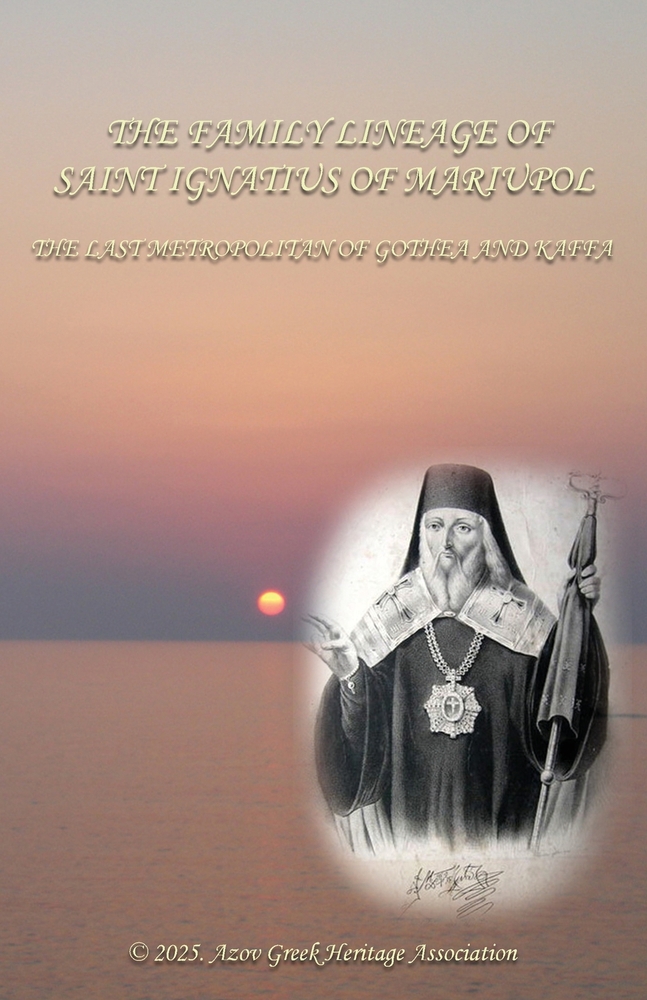
There is a tragic contradiction in the fate of Metropolitan Ignatius that cannot be easily reduced to a simple formula: saint, traitor, savior, instrument of empire, father of a people.
For some, he is the spiritual leader of the Crimean Christians, the man whose name is bound to the resettlement to the Azov region, the founding of Mariupol, and the birth of a new historical community — the Mariupol Greeks. Without him, perhaps, there would have been no Mariupol Greek world that became part of our memory, our surnames, our language, and our fate.
For others, he is a participant in a forced exodus, a man who blessed not only the road to a new land, but also the rupture with the old homeland. Crimea was not merely a place of residence. It was the centuries-old land of the Crimean Christians — their churches, cemeteries, gardens, homes, language, and way of life. The resettlement cannot be seen only as deliverance. It also carried the pain of loss, fear, betrayed expectations, and the bitterness of people caught between the will of an empire and the word of their shepherd.
That is why Ignatius is not a hagiographic figure in the usual sense, but a historically living one. He can neither be fully justified nor easily condemned. He acted in an age when the fates of peoples were decided not by the peoples themselves, but by empires. Yet his word had power. And for that word, he bears historical responsibility.
Perhaps the central drama of Metropolitan Ignatius lies in the fact that he wanted to enter history as a savior, but entered it as a man through whom the tragedy of an entire people passed.
The memory of him matters not because it gives us a ready answer. It matters because it compels us to ask difficult questions: where does pastoral care end and political service begin? Can a people be saved by depriving them of their native land? And does history have the right to turn the pain of resettlement into a beautiful legend?.
Leave a Reply